Jawaharlal Nehru University’s Centre for Japanese Studies offers B.A. honours study in Japanese in New Delhi, India. This independent programme guide does not describe an INTIAU award or partnership.
The current duration takes priority over an older page
JNU’s 2026-27 undergraduate prospectus explicitly describes B.A. (Hons.) in Japanese as a four-year programme. It develops reading, writing, speaking and listening alongside Japanese literary history, society and cultural traditions. Beginners receive language training. Read the current prospectus.
The centre’s programme-description page carries a 2017 content-update date and still describes three years and a 100-credit arrangement. It explains early work on hiragana, katakana and kanji, followed by wider language and cultural study. Treat that page as older explanatory context; its duration and credit total are not a current four-year graduation audit.
This is a practical example of why “official” and “same edition” are different checks. Keep the current award structure on the first page of your notes, then label older course material by its own scope. That allows you to learn from a useful outline without silently turning it into a promise about your entering cohort.
Selected real courses and learning tasks
The published BA course page supplies actual course-level detail. JP108 Text and Kanji uses lower-intermediate passages and introduces polite language; JP109 Applied Grammar practises sentence patterns; JP208 Translation works in both English-to-Japanese and Japanese-to-English directions. JP303 Introduction to Japanese Literature connects early literary traditions with their social and historical setting. These examples come from the posted outline, not a verified complete four-year timetable.
| Published example | Selected learning theme |
|---|---|
| JP108 / JP109 | Text comprehension, kanji and applied grammatical patterns |
| JP208 Translation | Short passages concerning culture, society and ways of life |
| JP303 Literature | Earlier Japanese texts and their historical contexts |
Read this sequence as a change in the kind of explanation expected. Recognising a character, constructing a grammatical sentence, and defending a translation choice are related but different achievements. Prepare a notebook with a text excerpt, your interpretation and a reason for each uncertain choice. Simply counting vocabulary entries will miss those differences.
Admission is a separate sequence
The 2026-27 prospectus requires both CUET(UG) English (101) and General Aptitude Test (501) for Japanese honours, followed by a separate JNU application after results. Its English-medium statement excepts language programmes; it does not make Japanese study wholly English-taught.
JNU’s admission index separates the undergraduate prospectus, registration instructions, UG schedule and result notices from postgraduate information. Follow the undergraduate documents applicable to your applicant category. A retained “LIVE” banner on the index is not, by itself, evidence that a dated application period remains open on 17 October 2026. No 2027 deadline is established here. Consult the admission documents.
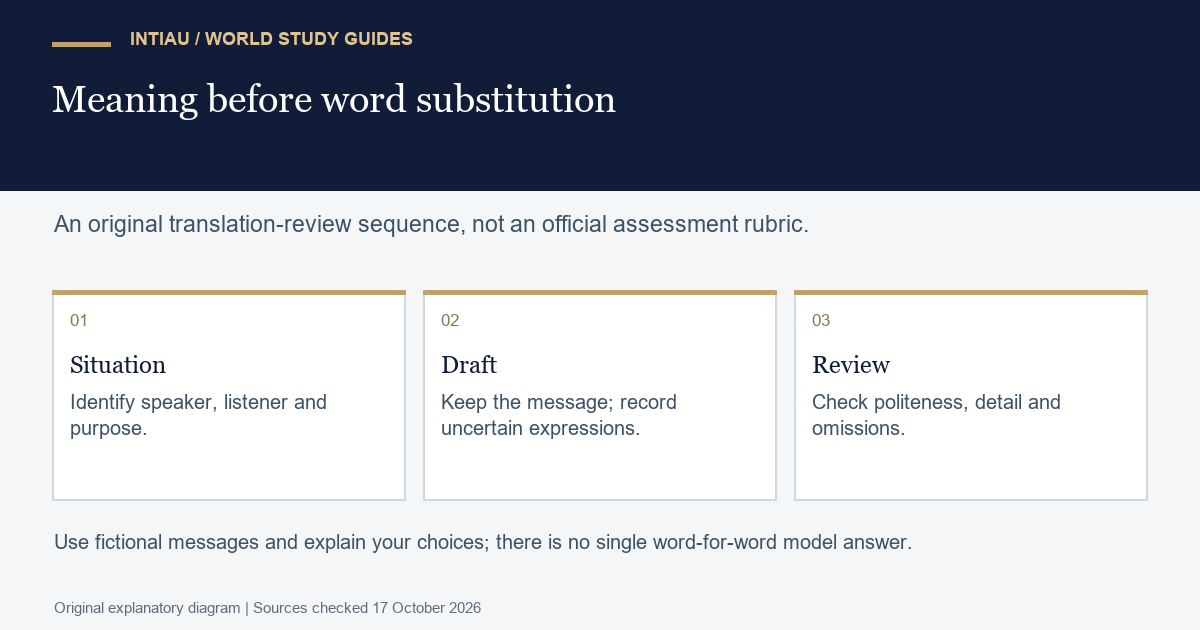
Original practice: preserve the situation
Use a fictional message: a student asks a tutor to move a meeting from Tuesday to Thursday because a laboratory session has changed. Before translating, list five pieces of meaning: who asks, who receives the request, the original day, the proposed day and the reason. Then draft a version appropriate to that relationship.
Suppose your first draft preserves four items but omits the reason. It is not fully equivalent merely because every translated sentence is grammatical. Add the reason, then ask whether the request sounds like a demand. Explain one politeness choice in plain English. A second version may choose different wording while retaining all five items and an appropriate relationship. The worked conclusion is about justified meaning and register, not an automatic score or an official JNU assessment.
Questions to settle
Is the current programme three years?
The 2026-27 prospectus specifies four years for Japanese honours.
Is the posted course page a complete current plan?
It supplies selected detailed outlines; this guide does not claim a verified complete four-year syllabus.
Does a CUET result complete the JNU application?
No. The prospectus also requires a separate university application.
Official reading
- Centre programme description (updated 2017)
- UG prospectus (2026-27)
- BA course outlines (published; undated syllabus)
- Admission notice index (2026)
For other study topics, browse INTIAU Courses; use Contact for questions about INTIAU services. University applications belong with the institution named above.
Related guides
View the study diagram