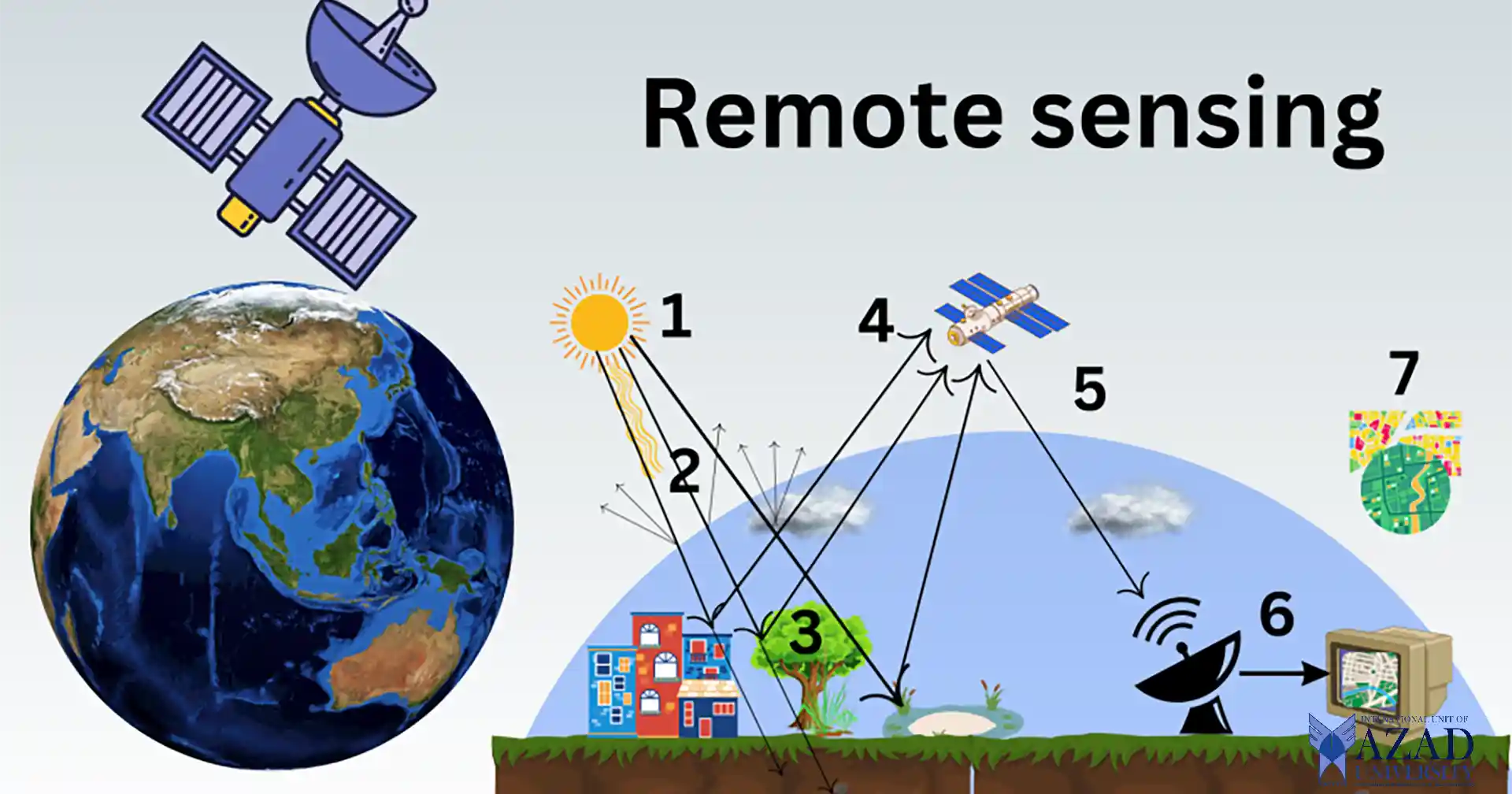
Remote sensing and Geographic Information Systems (GIS) concern the collection, organisation and interpretation of spatial information. Satellite imagery and geospatial data provide ways to investigate the Earth’s surface and connect observations with questions about places and change.
Remote sensing and spatial understanding
Remote sensing uses information such as satellite imagery to examine features and phenomena at the Earth’s surface. Academic work connects the information captured with the question being investigated and the limits of what the data show. The Cartography guide provides related foundations for representing locations and interpreting maps.
Environmental and planning applications
Land-use change, environmental impacts and sustainable development are application themes. Spatial analysis can provide evidence relevant to these questions, while interpretation still depends on the context and quality of the underlying information. The Urban Planning guide offers a related setting in which spatial evidence can inform questions about land use and communities.
Urban planning, agriculture and disaster management offer further settings for geospatial inquiry. The methods used should be selected in relation to a defined question rather than assuming that a map alone supplies a complete decision.
Research, AI and collaboration
Artificial intelligence and machine learning are research interests within geospatial analysis. Their use raises questions about how data are interpreted and how findings are evaluated alongside other evidence. The Statistics guide adds context for evaluating data, assumptions and the interpretation of analytical findings.
Tools and areas of focus
Environmental monitoring, urban planning and disaster response are possible areas of interest within the wider discipline. A course should state which of these it covers and the level of practical work involved.
ArcGIS and QGIS are software names associated with this subject. Studying a tool, being assessed in its use and holding a particular external certification are different matters. The exact software access and any certification issuer need direct confirmation.
Selecting a geospatial study route
Environmental consultancy, public agencies and research are related professional settings. Ask for the current syllabus, practical datasets, software arrangements, supervision and assessment methods. Confirm internships, exchanges and external certifications separately; a general overview does not establish them or guarantee employment, an award level or an online route.
Browse INTIAU Courses for other subjects, or use Contact for questions about university services.
The NOAA explanation of remote sensing distinguishes active and passive sensing and describes environmental applications. It provides external background for relating observed information to the physical features being studied.
Questions about Remote Sensing and GIS
What does GIS contribute to spatial-information study?
GIS provides a framework for organising spatial information. Mapping, analysis and the development of spatial databases can bring different observations together and support comparisons across locations or through time.
Why does geospatial research require communication and teamwork?
Research and project work also involve explaining methods and discussing results. Communication and teamwork help connect technical analysis with the people and organisations considering its implications.
Article illustrations