
The University of Melbourne’s Bachelor of Science with a Computing and Software Systems major is a Melbourne programme, not an INTIAU programme or partnership. It combines computing study with the wider BSc structure. This guide uses official information checked on 17 October 2026 and distinguishes the undergraduate major from later professional engineering study.
Understand the award and the major
The major overview lists Computing and Software Systems within both the Bachelor of Science and Bachelor of Design. This article concerns the BSc route. The surrounding degree requirements matter: two students with the same major title can have different choices elsewhere in their degrees.
Melbourne describes the major as preparation in programming and computing, including the practical application of technical knowledge. Its overview identifies the Master of Software Engineering as a possible further-study pathway for someone seeking an accredited software engineering qualification. Do not describe the undergraduate major itself as that professional master’s award or assume progression is automatic.
Build the major within the BSc
The current major-structure page describes eight subjects, totalling 100 credit points across second and third year. It separates the following components. This original planning table summarises those categories rather than assigning subjects to a compulsory personal timetable.
| Component | Published allocation | Planning purpose |
|---|---|---|
| Level 2 core | 37.5 points | Establish the shared technical foundation. |
| Level 2 major elective | 12.5 points | Choose within the permitted major options. |
| Level 3 core | 37.5 points | Develop advanced understanding. |
| Level 3 capstone | 12.5 points | Bring knowledge together in an integrating subject. |
Check the Handbook and your commencement-year rules before selecting subjects. A summary of the major is not the whole BSc: science electives, breadth and the degree’s other requirements also need space in the plan. Avoid filling every available slot with a preferred computing subject before checking the degree totals.
Trace the preparation behind advanced computing
The BSc-specific departmental overview describes first-year programming and algorithms, with university mathematics supporting later computing. It names areas such as object-oriented software development, data processing, algorithm design, software modelling and computation theory. These examples help explain the progression from writing small programs to reasoning about more substantial software and systems.
Use that progression as a way to evaluate your readiness. Can you explain why an algorithm works, test a program methodically and express a problem mathematically? If one area feels unfamiliar, identify the relevant introductory subject and the support available. Planning around a missing prerequisite is more useful than assuming that enthusiasm for an advanced topic replaces its preparation.
Check admissions for your qualification and intended year
The BSc entry-requirements page asks applicants to identify their background, qualification and intended commencement. Its displayed 2026 domestic admission data is a historical guide, not a universal entry score for another year or educational system. Applicants must satisfy the applicable prerequisites; selection can require more than meeting a published minimum.
Make your admissions checklist specific: accepted qualification, subject prerequisites, English evidence, application route and outstanding documents. If you have previous tertiary study, use the relevant applicant category rather than copying school-leaver instructions. Put a date beside any requirement you save and revisit it when the intended entry-year information is available.
Preserve flexibility without losing the prerequisite chain
Melbourne’s major-selection guidance says first-year choices influence later major options, while the major need not be finalised immediately. This makes early exploration valuable, provided it includes the subjects that unlock your likely pathways.
Sketch two versions of your plan: one centred on computing and one incorporating a second scientific interest. Mark which subjects are shared and which choices close a later option. Then discuss the uncertain points with Melbourne’s advisers. For each breadth subject, consider the different perspective it contributes rather than treating breadth as unused space.
Frequently asked questions
Is this a Bachelor of Software Engineering?
No. The award discussed here is the Bachelor of Science with a named major. Professional master’s study is a separate pathway with its own conditions.
Can I copy a Bachelor of Design course plan?
Use BSc requirements for the BSc route. The shared major name does not make the two degrees’ surrounding rules interchangeable.
Is a sample plan an approved individual timetable?
Use it to ask better questions. Confirm subject prerequisites, availability and commencement-year requirements before treating your own sequence as complete.
INTIAU information
For a separate INTIAU comparison, consult INTIAU courses or its contact page. Melbourne’s own admissions and course advisers determine Melbourne requirements.
Compare this major with the MIT EECS pathways and Toronto St. George Computer Science route. The curriculum-comparison workshop helps distinguish the major, surrounding degree and entry conditions.
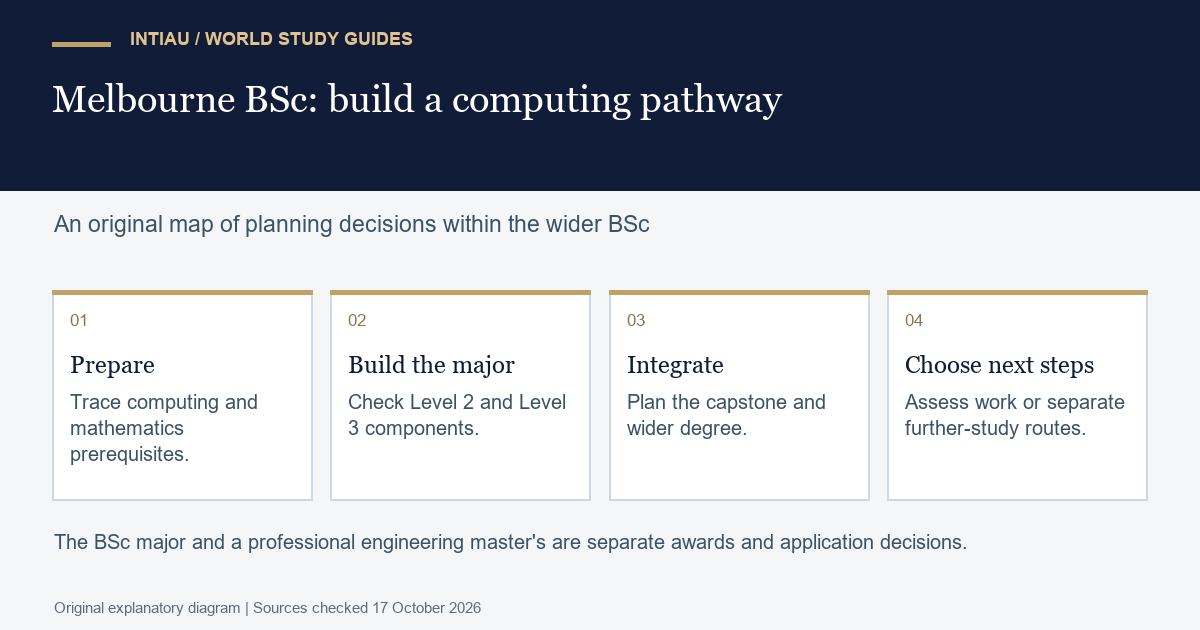
View the curriculum diagram
Official sources
Checked 17 October 2026: major overview, BSc major structure, departmental overview, BSc entry requirements and choosing a BSc major.